Background shows two coffee cups with a black notebook. Title. 'Walking The Teacher Wild'. Post Title. 4-Steps: Implementing Classroom Routine

4-Step Strategy: Implementing Classroom Routines

January 19, 202610 min read

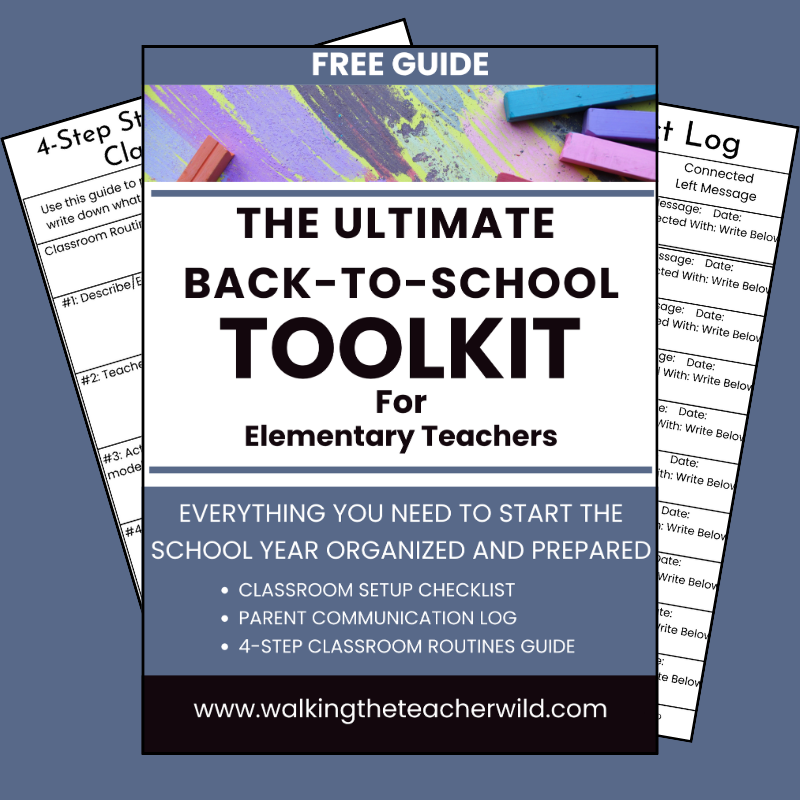
Click Here to Get My 4-Step Guide!

The beginning of the year is exciting and overwhelming for both teachers and students. One of the first things I focus on to set the tone for the year is to introduce and practice routines that come up throughout our day.


Here are the routines I talk about first to get us through the first few weeks:

  • Enter the classroom in the morning

  • Pencil sharpening routine

  • What to do if you need help and the teacher is unavailable

  • How to line up: Departure Area

  • How to walk in the halls

  • Rules on the playground

  • How To Turn In Completed Work

  • Dismissal Routine


These are the basic routines we start on the first day. Going through all these routines each day for the first few weeks of the school year can seem really tedious.


However, taking this time to implement routines well will decrease the need for you to repeat yourself later.


This process will strengthen your classroom management, because students will know what you expect and what to do during each routine. You will prevent issues before they start.


Here are is the 4 Steps Strategy for introducing a daily classroom routine:

  1. Describe The Routine: Talk about what you expect this routine to sound like and look like.

  2. Model: Show your students what the routine should look like. I also throw in a couple of examples that are not appropriate, so we can compare.

  3. Students Model: Ask one-two students to model the routine. Then discuss briefly what went well and how this routine helps the class.

  4. Practice: Practice as a class. Then talk about what went well, and if anything needs improvement.


Example: Entering The Classroom Routine:

  1. On the first day of school, I ask all students to bring their backpacks into the class and find their seat. Students keep everything in their backpack. I stand by the door, so I can see students walking in. This way I am also able to watch students in the hallway and the classroom at the same time.

  2. Students walk into the class and sit down at his/her desk.

  3. Students begin morning work that is already on all of their desks. Note: Every morning, I always have students’ work already placed on their desks.

  4. Students continue to work quietly while I take attendance.

  5. First, I take attendance, and I introduce myself and the class. After that, I explain how we will complete our Entering The Class routine each day.

  6. Then, I ask all of the students to line up with their backpacks and stand by their lockers.

  7. I ask one-two students to model how to put their things away in their locker, take out materials quietly, and walk into the classroom.

  8. Then I instruct the rest of the students to quietly put their backpacks in their lockers and take out any materials they brought.

  9. Next, the students walk quietly back to their seats, sit down, and start their work again.


Each day we practice our Entering The Classroom Routine which looks like this:


#1: Entering The Classroom Routine:

Students quietly hang up coats and backpacks in their lockers.

  • Students take out any material they need for class.

  • Students walk quietly into the class, go straight to their desks, and sit down.

  • Students begin their Morning Work quietly, while I take attendance.


Then we practice this routine every day for the first few weeks of school, using the 4-Step Strategy above. I also ask one-two students to model every day. Each day, when I pick my students up from breakfast, I remind them of our Enter the Class routine before we walk to the lockers.


If students are not following the routine, I stop them and ask them to go back to their lockers and start again. If there are a lot of students off-task, I stop the whole class. Then I remind them of the expectation, and I ask them to begin again.


We also spent some time discussing why we follow the routine this way:

  • We walk so students are safe

  • Students can focus better in calm, quiet classroom

  • We first sit in our seats, so the teacher can take attendance and see who is absent. The office needs to know who is absent to help keep everyone safe.


It is important for you to decide which routines you want to focus on the first few weeks of school. Here are some ideas to get you started:

  • Pencil sharpening routine

  • What to do if you need help and the teacher is unavailable

  • How to line up: Departure Area

  • How to walk in the halls

  • Rules on the playground

  • Where to place completed work

  • Dismissal Routine


#2: Classroom Pencil Sharpening Routine:

Pencils will need to be sharpened starting the first day. It’s important for you to think about how you want students to follow this routine.


Things to consider:

  • Are students able to get up whenever they need a pencil sharpened? Or only during work time, when you are not teaching the whole group?

  • Tip: I always give students 2 pencils on the first day, so if one breaks they have a back-up. We discuss how pencils should be used, and ways they cannot be used such as drumsticks… ever.

  • Think about where you place the pencil sharpener. I place it in the front of the class on a separate table, so I can see students and they aren’t too close to other students.

#3: Classroom Routine: Need Help? And The Teacher Is Unavailable:

  • On the first day of school, I ask students to go to our classroom library and choose three books. I give them a ziplock bag to place their books in and ask students to keep the books in their desks.

  • Then, if students need to wait a few minutes until I am able to help them, they can take out a book and read quietly until I come over to their desk.

  • I use the book option for the first week, and then I add other options for students to choose from as we advance into the year.


#4: Classroom Routine: How To Line Up

  • Choose a place in your classroom where you would like students to line up and designate that area as the Departure Area.

  • If you teach younger students, you can use painter’s tape to place a line on the floor or spaced out circles for students to stand on.

  • Consider whether you want the students to line up in alphabetical order or form a line in any order.

  • What is your expectation for their voices? Are they able to whisper quietly, or do you want the line to be silent? Make sure students understand what you are expecting, such as: hands by your side, feet walking quietly, voices off.


#5: Teacher Says: How To Walk In The Hall

  • Decide on what behaviors you want to see and hear when students are moving down the hallway.

  • Describe the routine and model for your students.

  • Ask your students to model the routine.

  • Practice as a class

  • Note: If you are teaching older students, such as third grade through fifth grade, you could combine this routine with #4 How To Line Up.


#6: School Routine: On the Playground - How To Stay Safe

  • First, I describe the rules for the playground.

  • Then, I take my class outside before recess and we walk around the playground together.

  • At each section, I describe the expectation and ask a student to model.


#7: Where To Place Complete Work In Your Classroom:

This is a routine that comes up multiple times per day. Where do you want students to place their work when they are finished?


Different Ways For Students To Turn In Work:

  • Do you want them to place their finished work in a Turn-In Basket somewhere in the room?

  • Students could place finished work in a folder, and then keep it at their seat until you are ready to collect it.

  • Students could place the completed assignment in the corner of their desk, and then take out the next assignment to work on.


Things To Consider:

Turn-In Basket:

Pro: You will have all the papers in one spot when your work time is completed.

Con: Multiple students may be getting up and walking through the room at the same time.


Turn-In Folder At Their Seats:

Pro: This procedure gets the work off of students’ desks and out of the way.

Con: You can’t tell if the student has truly completed the work at a glance. It takes a little more time to ask students to take out their folder and show you their work.


Completed Assignments Place In The Top Corner Of Their Desk:

Pro: You can see by glancing around the room, which students are finished. It’s easy to walk to a student’s desk and ask to see his/her work.

Con: Some students have a hard time keeping papers on their desk neatly.


My favorite way for students to turn in work is to keep completed work in the top corner of their desk. Then, at the end of that work time, I collected their assignments. I often walked around the classroom, and I looked at each paper to see if the student’s name was on the assignment and if it was completed before I collected it.


#8: Classroom Expectations: Dismissal Time

  • Describe your expectations and the school-wide expectations during this time

  • Make sure all students know the expectations at all the locations in case their method of transportation changes during the year.

  • I walk my class to all the different areas: Bus Area, Pick-Up Area, and Walkers Area to demonstrate to the class the expectations for all three areas.

  • Remember to model and practice with your class at each station.


Wrap Up:

These are some of the basic routines and procedures that I discuss with my students the first few weeks of school.


Take Action:

  • Make a list of routines that you want to discuss with your students

  • Decide your expectations for each routine

  • Use my 4-Step Strategy to plan out each routine you want to use in your classroom


Remember the 4-Step Strategy:

  1. Describe the routine: Talk about what you expect this routine to sound like and look like.

  2. Model: Show your students what the routine should look like. I also throw in a couple of examples that are not appropriate, so we can compare.

  3. Student’s Model: Ask one-two students to model the routine. Then discuss briefly what went well and how this routine helps the class.

  4. Practice: Practice as a class. Then talk about what went well, and if anything needs improvement.


Remember, it may seem like this process is taking a lot of time. However, taking the time to practice in the beginning of the year will save you time and energy later.


When students understand your expectations and procedures, you will have better classroom management and prevent issues before they begin!

Here Are Some Awesome Resources That Will Help You Even More:

The Small Groups Blueprint | Teachers 2nd-6th Grade! Tired of being told you need to differentiate for all your students, but never exactly how? In this Blueprint, I will show you each step, from setting up your classroom layout to implementing each group and what activities you can use.

I also walk you through how to set up automatic grading assessments, along with organizational tips!

The Small Groups Blueprint is your roadmap to implement Small Groups in your classroom that provide individualized instruction with fewer interruptions!

Click Here To Learn More!

The Academic Planner & Organizer | This Academic Planner & Organizer has everything you need, so you can stop scrambling to find binders.

Keep everything you need this year together in one place: monthly calendar, weekly overview, meeting notes, student data, parent contact information and more!

Save time and your sanity and check out this planner!


Click Here: Yes! Let's Get Organized!

Create Your Ideal Classroom Layout For Small Groups | This guide is the roadmap to help you create a classroom layout that supports a successful Small Group Time! Learn how some simple tweaks can make a world of difference and prevent issues before they start.

Set a strong foundation that sets you and your students up for success during your Small Group Time.

Click Here: Yes! Give Me The Free Guide!

I Support Teachers: Small Groups | Educational Technology | Classroom Management

Carolyn - Walking The Teacher Wild

I Support Teachers: Small Groups | Educational Technology | Classroom Management

Back to Blog

Free Guide

Create Your Ideal Classroom Layout: Small Groups

Teachers 2nd-6th! Here Is Your Guide To Kick-Start Your Planning For A Small Groups Time That Runs Smoothly, Without Constant Interruptions!

Free Guide: Create Your Ideal Classroom Layout: Small Groups

Teachers 2nd-6th! Here Is Your Guide To Kick-Start Your Planning For A Small Groups Time That Runs Smoothly, Without Constant Interruptions!

© 2025-2026 | WALKING THE WILD LLC, D/B/A WALKING THE TEACHER WILD | ALL RIGHTS RESERVED | PRIVACY POLICY | TERMS & CONDITIONS | DISCLAIMER