

5 Simple Steps for Setting Up Your Elementary Classroom
And… Disaster! That was usually my first thought when I walked into my classroom each August...until I changed the way I approached classroom setup.
I used to walk into my classroom every August with big plans…
Within an hour, every cabinet was open, supplies were everywhere, and I couldn't find anything I actually needed.
I remember standing in the middle of my classroom wondering,
"Where did my June self put this?"
Instead of making progress, I'd created an even bigger mess.
That's when I realized I needed a system—not just motivation.
Over the years I developed a simple five-step process that helped me prepare my classroom without feeling overwhelmed.
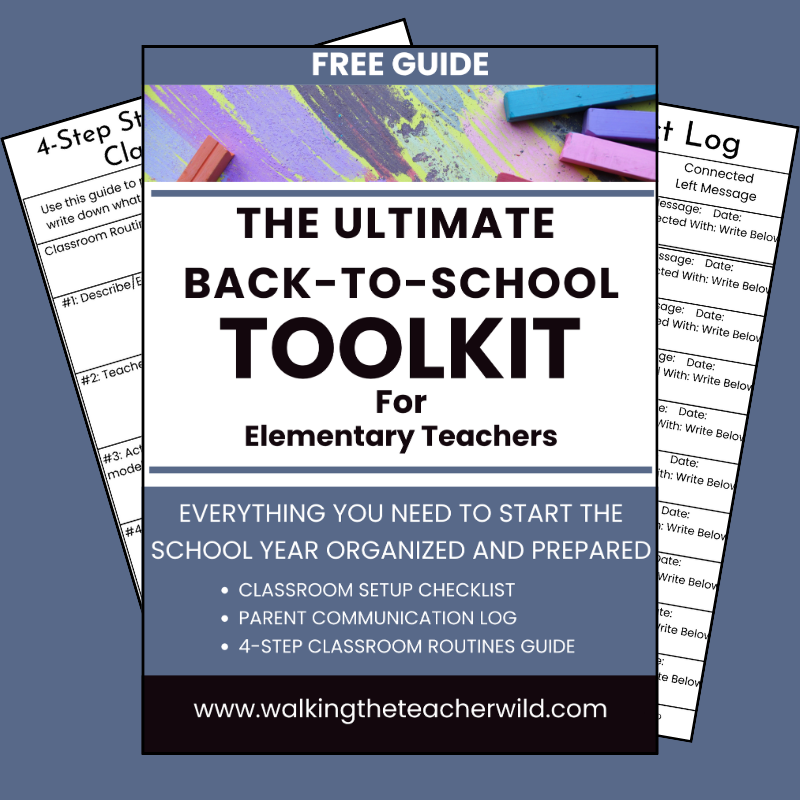
Grab The Free Back-to-School Toolkit
Want this classroom routines guide plus two additional back-to-school resources?
Download The Ultimate Back-to-School Toolkit For Elementary Teachers, which includes:
Classroom Setup Checklist
Parent Communication Log
4-Step Classroom Routines Guide
Download The Free Toolkit → Free Ultimate Back-to-School Toolkit
Before students and parents walked through my classroom door, I realized there were five key areas I needed to prepare.
Once I focused on these five priorities instead of trying to do everything at once, classroom setup became much less overwhelming.
Step 1: Set Up Your Classroom Furniture
I know you want to pull everything out of the cabinets, open anything new you’ve already purchased, and start dreaming of this coming year. Don’t Do It! Not Yet! Or you will start the year as I used to, and begin the year… behind.
Start by placing your desks, teacher table, bookshelves, and learning areas where you want them.
Once your furniture is in place, everything else becomes much easier to organize. Try not to overthink your classroom layout; you will be able to change it later.
I usually started the year with rows of two desks facing the front of the room. This gave students an easy partner for discussions while keeping everyone's attention focused during those important first lessons on classroom expectations.
Now that my classroom was no longer a tripping hazard, I moved on to the next step.
Step 2: Organize Student Supplies
Some years our supply shipment didn't arrive until after school started.
Because of that, I always kept a short list of the supplies I absolutely needed for the first week.
My essentials included:
1 Two-Pocket Folder
Two pencils
One large, pink eraser
One spiral-bound notebook
One box of crayons
Student Name Tags
If we didn’t have the supply order in yet, I could ask the office for the minimal list, or I knew I could buy the above supplies to get us started.
Step 3: Prepare First-Week Copies
Now, on to copies! First, I sat down in my organized room, and I planned the first week of school.
Yes, the first week. Every year, I forgot how extremely exhausted I was each day that first week. You will thank yourself for preparing for the entire week and enabling yourself to go home on time.
Then, I wrote a list of student copies that I needed for that first week, including any forms or newsletters to give to parents on our Meet-and-Greet Night.
Also, I always made three-four extra activity sheets, just in case something didn’t go as planned the first week.
Next, I bookmarked or downloaded a master copy of all the activity sheets I needed for the week, and I tabbed any teacher books that contained the necessary student lessons.
Tip:
Remember, the copier and your school computer have been on vacation too. I cannot, or should not, tell you how many times I walked from my classroom to the copier, only to find out… it didn’t print. And then I would still go back to my classroom, press print, and walk up to the copier again!!
Take. Your. Computer. With. You. To. The. Printer. When. You. Are. Ready. To. Print!
This will save you so much time! While I waited for my copies to print, I wrote out name tags and collated worksheets.
Take the time to stop, take a breath and feel great that you have so much done already!! Yay!
Step 4: Create Purposeful Bulletin Boards
I tried to create bulletin boards that served a purpose rather than simply filling wall space.
Before school started, I prepared the backgrounds, borders, and titles. Then I added student work and classroom materials throughout the first few weeks.
Here are my bulletin board areas:
Student Work
Monthly Projects
Class Expectations and Class Encouragement
Reading Train: This usually was posted on my cabinets, since I ran out of bulletin board or whiteboard space. I also added our Book Recommendations in this area.
These bulletin boards gave students a place to celebrate their work, reinforced classroom expectations, and encouraged reading throughout the year.
Step 5: Create a Beginning-of-the-Year Storage Spot
After the initial classroom setup was completed, I chose a place, on one shelf or in one of my cabinets. In this location, I started to gather things throughout the year that I knew I would need next Fall.
Materials such as:
A folder for one copy of each activity I might want to use next Fall. I also packed The Parent Information Form and a copy of the August/September Newsletter.
I stored any extra bulletin board borders in this spot.
I also put any extra supplies in this area: pencils, erasers, unused crayon boxes, folders, spiral-bound notebooks, and black and white composition books.
I created a List of Ideas, and either placed it in the folder with the copies or taped it up on the inside of the cabinet doors. I listed any new ideas that came to mind for the next year.
Every year, I thanked my past self for taking a few minutes to organize this cabinet. When August arrived, I wasn't starting from scratch—I already had a foundation ready to go.
Classroom setup doesn't have to feel overwhelming.
A simple plan helps you focus on what matters most so you can spend less time feeling scattered and more time getting excited to welcome your students.
Your future self will thank you.
Want Even More Back-to-School Support?
This classroom setup guide is one part of my Ultimate Back-to-School Toolkit, designed to help you start the school year feeling organized and confident.
Inside you'll get:
Classroom Setup Checklist
Parent Communication Log
4-Step Classroom Routines Guide
Download the FREE Toolkit → The Ultimate Back-to-School Toolkit
Continue Reading: